
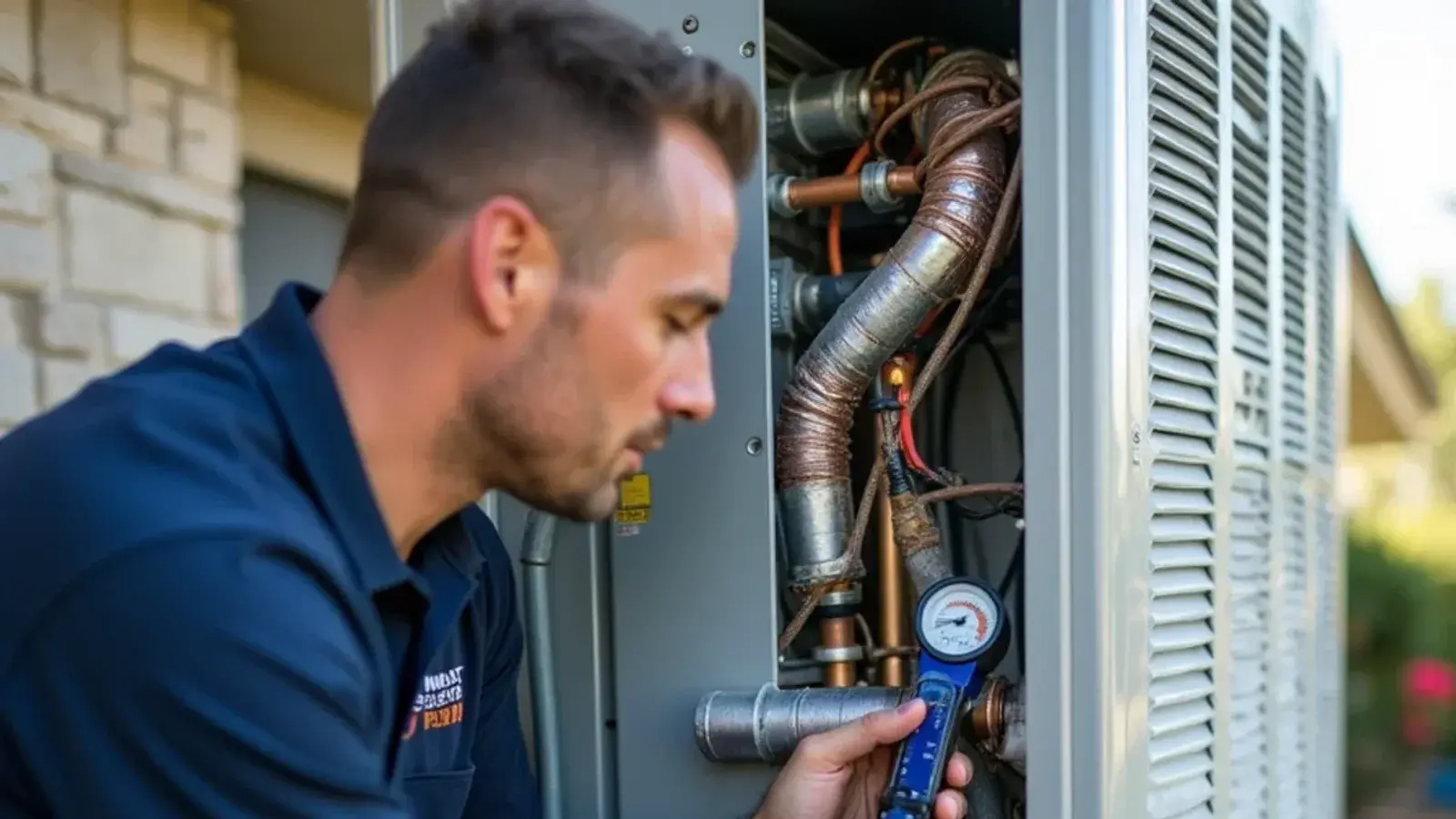
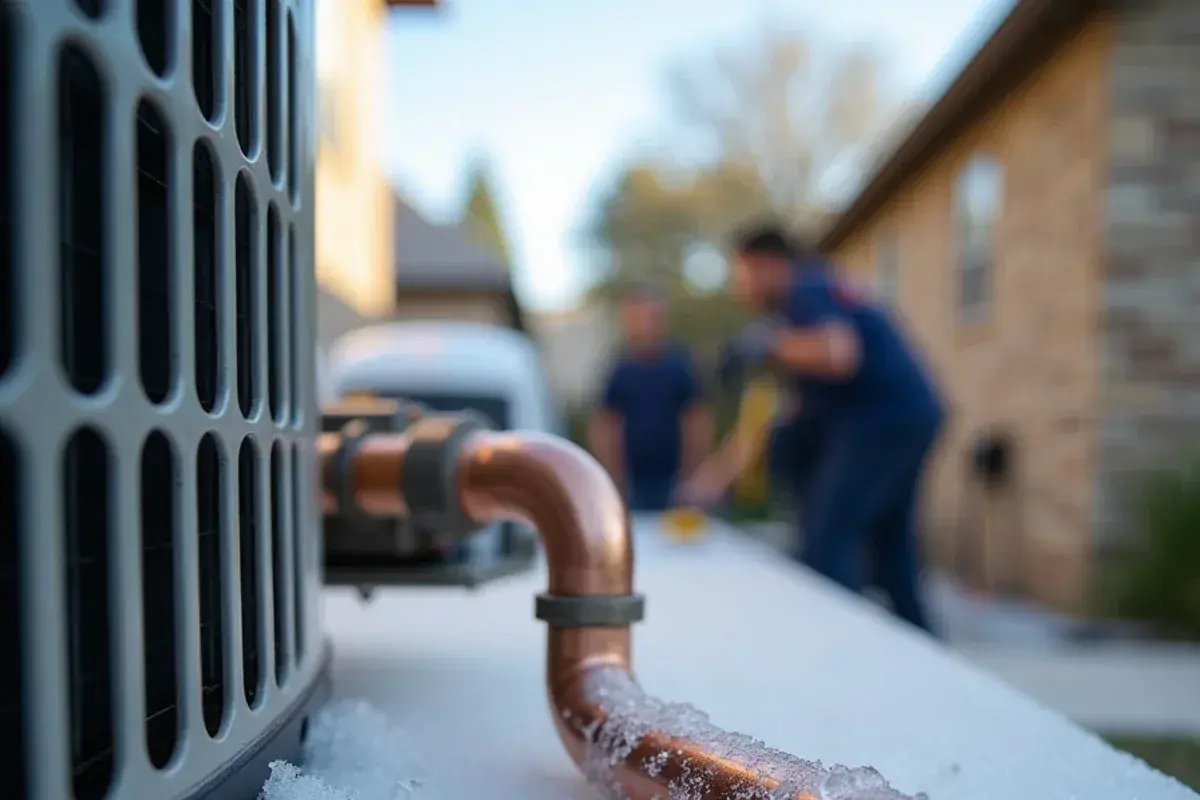
Walking into your utility closet or glancing at your outdoor condenser to find copper pipes encased in solid white ice is an alarming discovery during a Killeen summer. How can an air conditioner freeze solid when afternoon temperatures outside exceed ninety-eight degrees? The presence of frost or ice along your insulated copper suction line or indoor air handler cabinet indicates that the thermodynamic balance of your cooling equipment has collapsed. Instead of absorbing indoor heat and draining moisture safely, the system drops below freezing temperatures.
Operating a frozen air conditioning system creates immediate risks for your home and mechanical equipment. When ice blankets the indoor evaporator coil, air can no longer pass through the aluminum fins, choking off all cold air delivery to your living spaces. More critically, continuing to run an iced unit forces liquid refrigerant back into the compressor chamber, causing liquid slugging that can crack internal valves and destroy the compressor motor. If you notice frost forming, shut the cooling mode off immediately at your thermostat and call Quality Heating & Air Conditioning for specialized diagnostic AC repair.
What does our frozen AC repair service include?
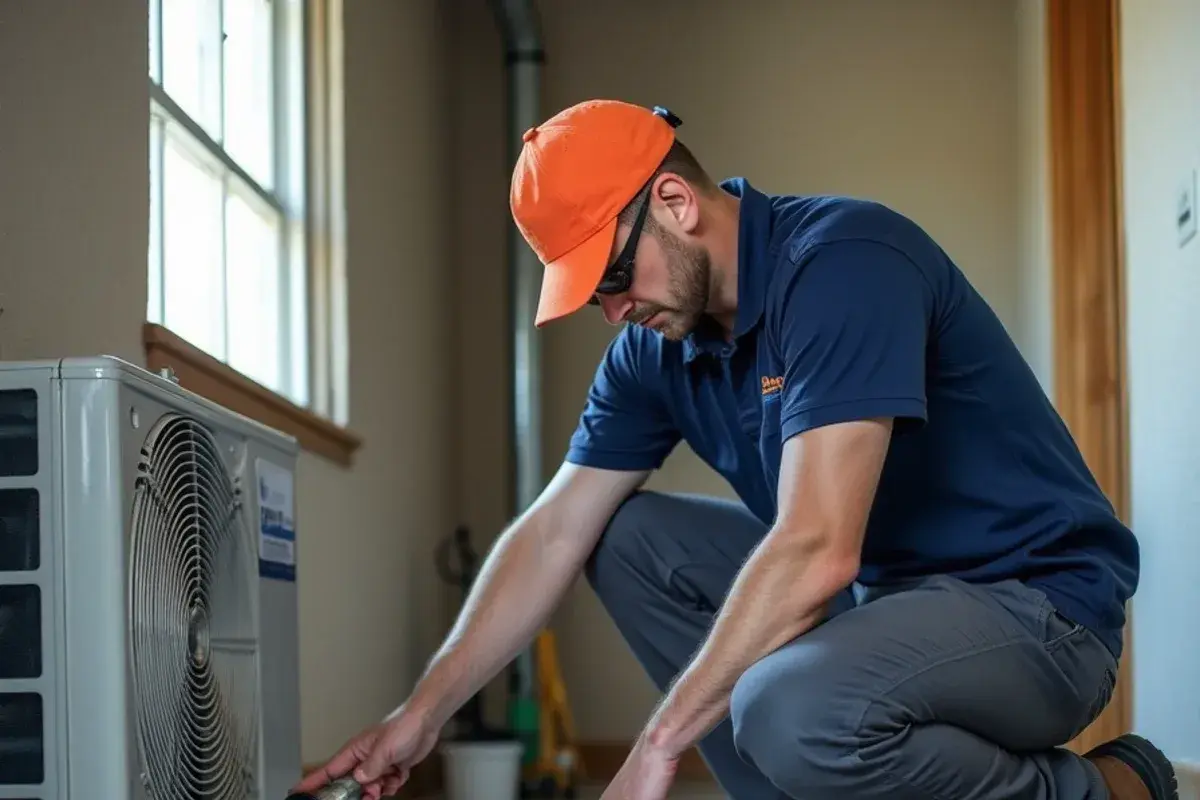
Resolving an iced cooling system requires identifying why coil temperatures dropped below thirty-two degrees Fahrenheit in the first place. Our certified technicians follow a comprehensive diagnostic methodology once the ice has safely melted:
- Controlled Coil Defrost & Condensate Pan Monitoring: Managing the melting process safely, ensuring melting ice drains through the primary trap rather than overflowing secondary emergency pans into ceiling drywall.
- Total External Static Pressure (TESP) Testing: Inserting static pressure probes into supply and return plenums to measure airflow resistance across the air filter, coil, and ductwork.
- Blower Assembly & Motor Capacitance Triage: Inspecting squirrel cage fan blades for caked dust and testing blower motor run capacitors and ECM control modules for speed degradation.
- Electronic Refrigerant Leak Detection: Utilizing electronic halogen sniffers and ultrasonic instruments to pinpoint microscopic hairline cracks along aluminum coil tubing and brass service valves.
- Thermostatic Expansion Valve (TXV) Calibration: Verifying that the refrigerant metering device is feeding proper liquid volume rather than starving the evaporator coil.
- Post-Repair Operating Verification: Operating the system under full summer heat load to verify that operating pressures, superheat, and subcooling remain well within manufacturer specifications.
Common warning signs your air conditioner is beginning to freeze
Recognizing the earliest signs of ice buildup allows Killeen homeowners to turn off their equipment before a minor frost layer turns into a thick, solid block of ice:
The first indicator is usually a noticeable drop in airflow from your ceiling registers, accompanied by a gradual rise in indoor temperature despite continuous operation. You may also hear a faint hissing or gurgling noise near the indoor air handler as refrigerant struggles to pass through frozen coil circuits. Looking at the indoor unit, you might spot condensation sweating excessively along the sheet metal cabinet or dripping steadily into the auxiliary drain pan. At the outdoor condenser, frost typically begins forming at the brass suction line service valve before creeping along the insulated copper pipe toward the compressor cabinet.
Why Central Texas humidity accelerates evaporator coil freeze-ups
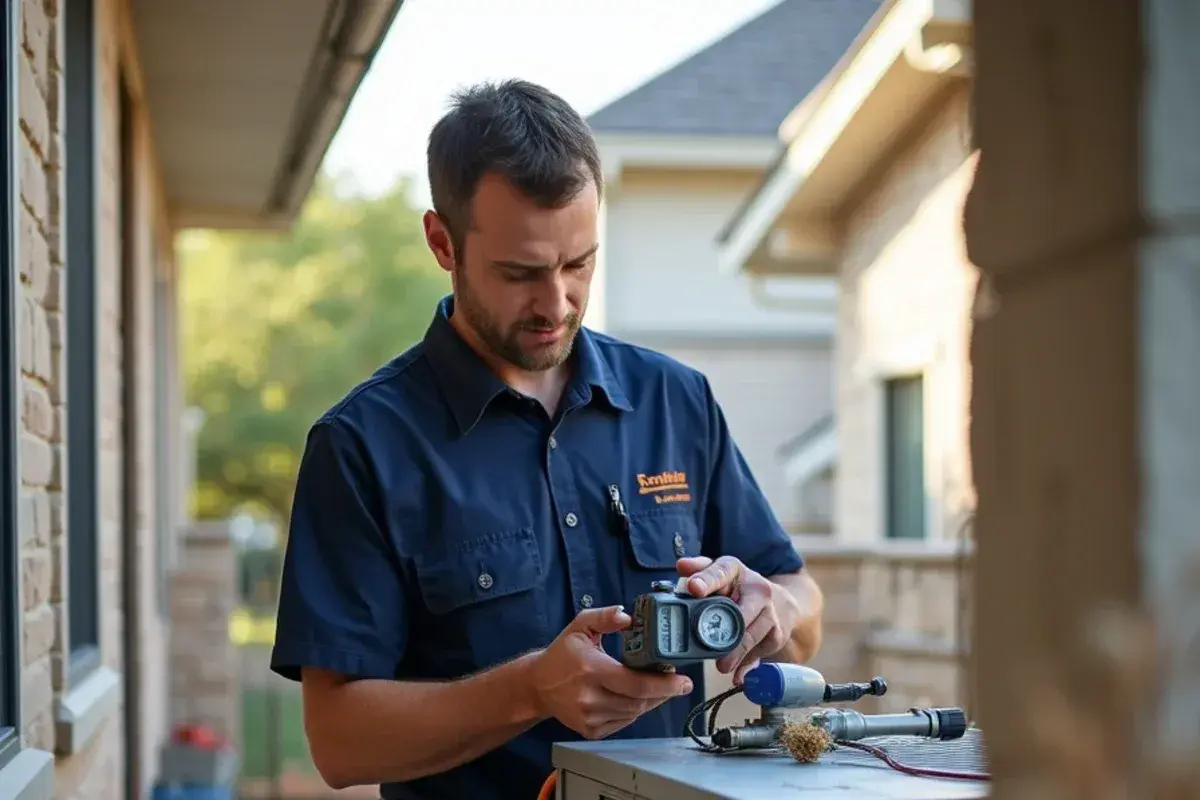
Central Texas summer weather presents high latent humidity levels that dramatically speed up ice formation once coil temperatures dip below freezing. In Bell and Coryell counties, humid air carrying Gulf moisture enters homes through ventilation and doors. Under healthy conditions, this moisture condenses cleanly into liquid on the 45°F coil fins and drains outdoors.
However, when airflow drops or refrigerant leaks, surface temperatures fall below 30°F, flash-freezing condensation on contact. In high Central Texas humidity, frost thickens into solid ice within hours, choking airflow and straining the indoor blower motor.
Airflow bottlenecks versus refrigerant leaks: identifying the root cause
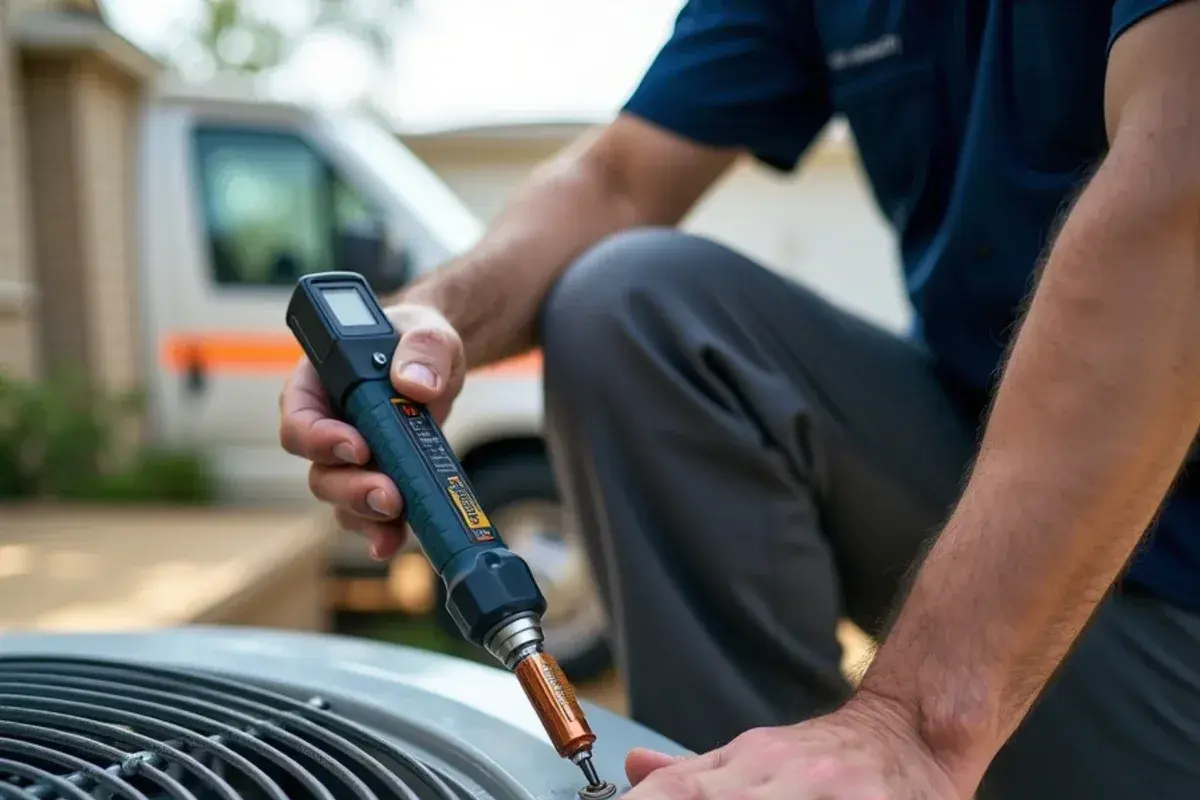
Accurate diagnosis requires distinguishing whether the freeze was triggered by airflow starvation or chemical refrigerant loss:
- Airflow Starvation: An air conditioner requires roughly 400 cubic feet per minute (CFM) of air per ton of cooling capacity to transfer heat into the refrigerant. When a high-MERV filter becomes packed with dust, an indoor blower motor loses speed, or return air grilles are obstructed, heat transfer stalls. Without sufficient warm air, the liquid refrigerant cannot boil off into vapor, dropping suction pressure and freezing the coil solid.
- Refrigerant Loss from Tubing Fractures: When copper lines develop pinhole corrosion or brazed joints fracture from vibration, refrigerant escapes into the atmosphere. Lower chemical mass inside the sealed circuit results in lower suction pressure. According to thermodynamic physics, lower pressure forces the refrigerant boiling point below freezing, turning moisture into ice even with clean filters and adequate airflow.
- Failed Metering Valves: If a thermostatic expansion valve sticks in a throttled position or loses sensing bulb pressure, it starves the evaporator of liquid refrigerant, creating localized sub-freezing spots that trigger widespread icing across the coil face.
Our 6-step frozen AC diagnostic and restoration protocol
To restore reliable cooling without risking water damage or compressor destruction, Quality Heating & Air Conditioning follows a disciplined restoration protocol:
- System Shutdown & Drainage Protection: We verify the cooling cycle is powered down, switch the blower fan to circulate ambient air, and inspect drain lines to prevent attic overflow.
- Static Airflow & Duct Pressure Profiling: Once thawed, we measure return and supply static pressures with digital manometers to verify whether duct bottlenecks caused the freeze.
- Blower Motor & Wheel Inspection: We examine the blower wheel blades for lint and grease buildup and test the blower motor capacitor to confirm proper cubic feet per minute delivery.
- Refrigerant Pressure & Leak Isolation: Connecting digital manifold gauges, we measure operating pressures and deploy electronic halogen leak detectors along copper joints to isolate leaks.
- Transparent Upfront Repair Estimate: We detail the mechanical fault and provide a firm, flat-rate written quote outlining all necessary repairs before any mechanical work begins.
- Re-Commissioning & Floodback Verification: After completing repairs, we monitor the system through a full run cycle to ensure suction pressures remain above freezing and liquid refrigerant does not enter the compressor.
What factors determine the cost of repairing a frozen air conditioner?
Repair costs for a frozen air conditioning system depend entirely on whether the failure stems from a straightforward airflow obstruction or a sealed refrigeration breach:
- Airflow Cleaning & Electrical Components: Basic airflow remedies such as clearing a blocked condensate trap, replacing an out-of-tolerance blower capacitor, or cleaning a dusty blower wheel fall into routine service brackets.
- Deep Coil Restoration & Decontamination: When the evaporator coil aluminum fins are heavily fouled with cedar pollen or household pet hair, removing the coil for chemical washing and fin combing requires moderate labor investment.
- Refrigerant Brazing & Circuit Recharging: If a refrigerant leak caused the freeze, costs reflect electronic leak pinpointing, nitrogen pressure testing, copper brazing with high-silver alloy, and recharging with virgin refrigerant under federal guidelines.
- Diagnostic Credit Policy: When you approve the recommended repairs, our technician credits your initial diagnostic inspection fee directly against the total service balance. For aging systems with compressor damage, we review the 50% rule to help you compare repair costs against a modern AC replacement installation.
TDLR-licensed refrigeration contractors with 50 years of family lineage
Repairing frozen cooling equipment in Texas requires licensed mechanical oversight and thorough technical training. Quality Heating & Air Conditioning operates under Texas Department of Licensing and Regulation (TDLR) License #TACLB23981E. This Class A license guarantees verified mechanical competency, state-mandated commercial insurance coverage, and compliance with the International Mechanical Code. Furthermore, our technicians maintain Universal EPA Section 608 Certification under the Clean Air Act, ensuring lawful recovery and handling of all residential refrigerants.
Back in 1973, Oliver Kilpatrick established our local heating and cooling company in Killeen to deliver honest mechanical service. Led today by President Jerry Kilpatrick from our 1112 Florence Rd location, we bring three generations of Bell County know-how to every call, providing clear pricing and lasting repairs without commission-driven sales tactics.
Where we do frozen ac repair around Killeen
A few of the communities we serve, and what this service usually looks like there.
- Frozen AC Repair in Temple, TX
Temple homeowners experiencing iced suction lines receive fast diagnostic service to prevent compressor damage and ceiling water leaks.
- Frozen AC Repair in Copperas Cove, TX
Hillside homes in Copperas Cove trust our technicians to identify return duct restrictions and resolve evaporator freeze-ups.
- Frozen AC Repair in Harker Heights, TX
Multi-level properties near Comanche Gap receive careful static pressure checks to eliminate airflow bottlenecks that cause freezing.
- Frozen AC Repair in Belton, TX
Belton residences with attic-mounted air handlers depend on our prompt response to prevent overflowing condensate pans from damaging drywall.
- Frozen AC Repair in Fort Cavazos, TX
Military families near Fort Cavazos receive urgent diagnostic appointments when frozen coils cut off cooling during summer deployments.
- Frozen AC Repair in Nolanville, TX
Subdivision residences along Interstate 14 count on our team to safely thaw frozen systems and repair underlying refrigerant leaks.
- Frozen AC Repair in Salado, TX
Salado custom properties receive detailed blower motor and duct inspections to maintain proper airflow and prevent recurring ice formation.
- Frozen AC Repair in Gatesville, TX
Coryell County ranch homes trust our experienced technicians to troubleshoot frozen heat pump coils and restore dependable cooling.
- Frozen AC Repair in Kempner, TX
Rural properties along US-190 depend on our comprehensive service vans to resolve low refrigerant conditions on the first visit.
Google reviews that mention work like frozen ac repair
3.8 out of 5 from 57 Google reviews
“Awesome place! They came out and did an estimate on my a/c that was freezing over. Determined it needed cleaning. I had them come out after an estimate of $350-$400, when I was quoted $500 by a different company not long before. The guys Dale and Max were very nice and professional. They came in pulled the coils and cleaned them. They put everything back and cleaned up. They treated myself and my family with respect and were very nice to our cats as we run a rescue in our home. Max is allergic to cats and never once complained! I will continue to use their company for my heating and air conditioning needs! The final cost was $375 for them to pull and clean my a/c coils. Very affordable!!”
- Fair pricing
- Quality workmanship
- Clean work area
- Affordability
Services: Frozen AC coil cleaning & diagnosis
Response from the owner: Thank you for your kind words. We appreciate your business and look forward to future business with you.
“The young man that came by did an amazing job fixing and cleaning my AC. I would like to share and get it out that I would use this company anytime! He even called to check on it after he left!”
- Coil cleaning
- Follow-up call
- Polite technician
Services: AC repair, coil cleaning & follow-up check
“I should not tell you how pleasant it is to be able to text your air conditioner company and have them respond and show up when they say they will. They absolutely fix everything that has an issue. They are pleasant to deal with. The reason I should not tell you this is that you will use them and if everyone starts to use them then they will be busy. But good service and people should be rewarded. Cory is the owner and I highly recommend his work ethic and responsiveness. Great prices as well. You have air issues? Use this company.”
- Responsiveness
- Punctuality
- Quality
- Value
Services: Air conditioning repair & service
Frequently asked questions about frozen AC coils and lines in Killeen
What causes an air conditioner to freeze up?
An air conditioner freezes when the operating temperature of the indoor evaporator coil drops below thirty-two degrees Fahrenheit. The two primary causes are restricted airflow (from clogged filters, closed registers, or dirty blower wheels) and low refrigerant levels caused by a leak. Without sufficient warm air blowing across the coil, refrigerant cannot absorb heat, causing condensation to freeze into solid ice.
How long should I let a frozen AC thaw before calling?
A frozen evaporator coil can take anywhere from three to eight hours to thaw completely depending on the thickness of the ice. Turn cooling off at your thermostat immediately and switch the fan setting to 'On' to circulate warm air across the coil. Place towels around the indoor air handler to catch melting runoff, and call our office so a technician can arrive once the ice has melted.
Can a clogged filter really freeze my evaporator coil?
Yes, absolutely. A severely dirty air filter restricts the volume of warm return air passing across the aluminum evaporator fins. Without enough heat to vaporize the refrigerant inside the tubing, operating pressures and temperatures plunge below freezing. The moisture extracted from your indoor air quickly turns into frost and gradually builds into an airtight wall of ice.
Does a frozen AC always mean low refrigerant?
No. While a refrigerant leak is a frequent culprit, airflow restrictions cause just as many freeze-ups in Killeen homes. Collapsed flex ducting in hot attics, caked dust on the blower motor wheel, dirty evaporator coil fins, or undersized return air grilles will all cause a system with a correct refrigerant charge to freeze solid.
Will running a frozen AC ruin the compressor?
Yes, running a frozen system risks catastrophic compressor failure. When the evaporator coil is iced over, liquid refrigerant cannot boil off into vapor. Liquid refrigerant then travels down the suction line directly into the compressor pump chamber—a condition known as liquid slugging. Because liquids cannot be compressed, internal scroll plates shatter, destroying the motor.
Still have a question about frozen ac repair? Ask us directly.
Call (213) 423-7827